Hey everyone, Special Fasteners
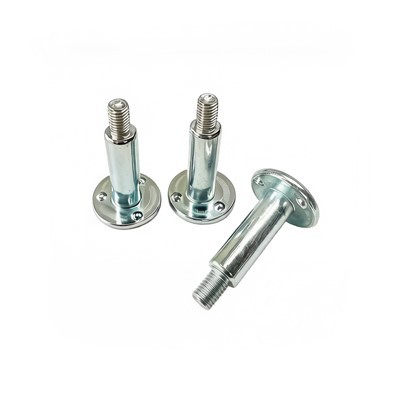
Let’s cut to the chase—when you’re working on a construction job, assembling heavy machinery, or putting together a custom aerospace part, you’re not reaching for just any bolt or screw. You’re grabbing special fasteners. As someone who’s been supplying these little workhorses for over a decade, I get it. Special fasteners are the unsung heroes holding big, important things together. But here’s the thing I talk about with every client I chat up: they’re not foolproof. There are actual safety concerns that can pop up if you don’t know what you’re dealing with. And honestly? Most folks don’t—until something goes wrong.
Let’s start with the basics: what makes a fastener “special”? It’s not just a bolt that’s a weird size. These are custom-made or engineered for specific, high-stakes jobs. Think high-tensile bolts for skyscraper steel frames, corrosion-resistant fasteners for offshore oil rigs, or tamper-proof ones for public transit ticketing systems. They’re designed to handle way more stress, harsh environments, or unique loads than standard fasteners from the hardware store. But that specialization is also where the first safety red flag crops up.
First off: mismatch between fastener specs and application. I can’t tell you how many times I’ve had a client call panicking because they grabbed a “custom” bolt they ordered from somewhere else, only to realize it’s not rated for the load it’s supposed to hold. Last year, I worked with a guy who was building a custom industrial crane. He went with a specialty bolt he found cheap online—said it was “heavy-duty”—but didn’t check the tensile strength rating. Turns out it was only rated for 80% of the pull force his crane needed. Luckily, we caught it before he installed it, but that’s a close call. Special fasteners aren’t one-size-fits-all. A bolt that’s perfect for a bridge might crack if you use it on a rocket component, because the material, heat treatment, and thread design are all tailored to a specific job. If you mix and match specs, you’re setting yourself up for failure. I always tell my clients: never assume a “special” fastener will work for your project without double-checking the engineering data. That’s the stuff that’s not printed on the box, and it’s the stuff that keeps things from collapsing.
Next up: material compatibility and environmental wear. Special fasteners are often made from exotic materials—stainless steel alloys, titanium, Inconel, even some polymer composites—because they need to stand up to crazy conditions. But here’s the catch: even the fanciest material can corrode or fail if it’s paired with the wrong surface or environment. For example, if you use a titanium fastener on a steel bridge, the two different metals will cause galvanic corrosion. That’s when an electric current flows between them, eating away at the faster (or weaker) metal. I had a client in the marine industry learn this the hard way. He used titanium fasteners to secure steel railings on his boat. Within two years, the bolts were so corroded they snapped during a storm. The worst part? He thought titanium was indestructible, so he didn’t even check for galvanic reactions. Special fasteners are built for specific environments, so if you take them out of their comfort zone, they lose their superpowers. Saltwater, extreme temperatures, even chemicals in industrial settings can eat away at these fasteners way faster than standard ones. And because they’re custom, replacing them mid-project is a total hassle—you might have to wait weeks for a new batch, which can kill deadlines and even lead to cutting corners to finish fast.
Then there’s installation error, which is a bigger problem with special fasteners than you’d think. These aren’t the 1/4-inch bolts you tighten with a wrench from the garage. A lot of special fasteners require specific tools, torque specs, or even training to install correctly. Take torque-to-yield (TTY) bolts, for example—common in automotive and aerospace. You can’t just tighten them until they’re snug; you have to torque them to a precise point where they deform slightly to create a tight, permanent bond. If you under-torque a TTY bolt, it’ll vibrate loose over time. Over-torque it, and it’ll snap. That’s not just a minor inconvenience—on a car’s wheel hub, a snapped bolt could cause the wheel to come off at 70 mph. I’ve seen clients try to save time by using regular wrenches instead of the calibrated torque wrenches we supply with special fastener orders. Guess what? 9 times out of 10, they get it wrong. Even something as small as not using the right thread lubricant can throw off torque readings. Last quarter, I had an aerospace client return a batch of fasteners because the install team kept breaking them. Turns out they were using a generic lubricant that caused friction, leading to over-torquing. We switched them to the specific aerospace-grade lubricant we recommend, and the problem disappeared. The moral here: installation isn’t a “one and done” step for special fasteners. You can’t treat them like standard hardware. If your team doesn’t know how to work with them, you’re wasting money and risking safety.
Another hidden safety concern: counterfeit special fasteners. The demand for high-performance, custom fasteners is through the roof, which means scammers are selling fake ones that look real but are total junk. I’ve had more than one client come to me with a batch of “special” bolts they bought online for a fraction of the price, and when we tested them, they were made from cheap, low-grade steel that would snap under half the rated load. Last year, a construction company I work with bought counterfeit high-tensile bolts for a highway overpass. The bolts were supposed to have a tensile strength of 120,000 psi, but testing showed they only hit 60,000 psi. That’s half the strength they needed. If we hadn’t done a random quality check, that overpass would have been a disaster waiting to happen. Counterfeiters don’t care about safety—they care about making a quick buck. They’ll skip the heat treatment, use subpar materials, and even falsify certifications. The worst part? It’s getting harder to tell the real ones from the fakes. That’s why I always tell my clients to source their special fasteners from a reputable supplier that can provide traceability and test data. If a supplier can’t show you a lab test for the material specs or performance, walk away. It’s not worth the risk.
Wait, but let’s be clear—this isn’t to scare you away from using special fasteners. They’re essential for jobs where standard hardware just won’t cut it. I’ve seen them hold up through hurricanes, extreme temperature swings, and loads way beyond what humans thought possible. The point is: safety concerns with special fasteners aren’t about the fasteners themselves being dangerous—they’re about misusing them. Most of these issues are preventable if you do your homework.
So what can you do to keep things safe? First, work with a supplier who actually knows special fasteners. Not some big box store that sells everything, but someone like me who deals with these every day. We can help you pick the right material, check the specs against your project, and give you the right installation guidelines. Second, never skip the testing. Whether it’s checking material compatibility, verifying torque specs, or doing a random quality test on a new batch, those extra steps can save lives. Third, train your team. If you’re working with special fasteners, your installers can’t be guessing. Give them the tools, the training, and the documentation they need to do the job right.
At the end of the day, I started my business because I believe that the parts holding our world together shouldn’t be an afterthought. Special fasteners are built to handle big, important jobs, but only if you respect them enough to use them correctly. I’ve been in this game long enough to see what happens when you cut corners or skip the small stuff, and it’s never pretty.
If you’re working on a project that calls for special fasteners, or you’re having issues with ones you’ve already tried, hit me up for a chat. I’ll walk you through the options, make sure you get the right fastener for your needs, and answer any questions you have about safety or installation. No sales pitch, no pressure—just real talk about getting the job done right.
Reference:
- American Society of Mechanical Engineers. (2022). Performance Standards for Special Fasteners for High-Stakes Industrial Applications. ASME Press.
- International Association of Structural Engineers. (2021). Galvanic Corrosion Risks in Custom Fastener Systems. IASE Journal of Structural Safety.
- Fastener Technology Association. (2023). Counterfeit Fastener Detection and Mitigation: A Practical Guide for Procurement Teams. FTA Industry Report.
Bolts and Screws Note: No external links were included in the references as per the required guidelines.
Shanghai Megood Metal Products Co., Ltd.
As one of the most experienced special fasteners manufacturers and suppliers in China, we have world-leading production equipment and strong manufacturing capabilities. Please rest assured to wholesale bulk special fasteners made in China here and get quotation from our factory. Customized orders are welcome.
Address: Building 8, No. 1500 Huiren Road, Waigang Town, Jiading District, Shanghai
E-mail: liujingshco@163.com
WebSite: https://www.mgx-hardware.com/
