If you’ve ever spent a day hiking a steep trail, waiting for a race to start in humid early-morning air, or cycling through a city’s midday heat, you know the frustration of sticky, damp backs and the constant need to shift a bag that won’t stop sliding or breathing. As a supplier of multi-functional outdoor chest bags, I get asked this question more than any other in the past three years: Do these bags actually have breathable back panels? It’s not a trivial question, either—for anyone who uses outdoor gear, a bag’s breathability can make or break a day. Today, I want to break down what breathability in a chest bag back panel really means, why it matters for outdoor use, how our own products are designed, and what you should look for when shopping for this kind of gear. Multi-functional Outdoor Chest Bag

First, let’s get one key point straight: Breathability for bags isn’t the same as wearing a breathable t-shirt. Fabrics like cotton or polyester can wick moisture from your skin, but a bag’s back panel has to balance two conflicting needs: it needs to hold its shape so it doesn’t sag or dig into your shoulders, and it needs to let sweat and air circulate instead of trapping moisture. For context, the average person sweats roughly 0.5 to 1 liter per hour during moderate activity like hiking, and even more during high-intensity exercise. If that sweat gets trapped against your back, it doesn’t just leave you wet and uncomfortable—it can cause chafing, especially on long trails or during all-day events. That’s why back panel design is not an afterthought; it’s one of the most critical parts of a functional outdoor chest bag.
A lot of people confuse “breathable back panel” with “mesh panel,” but that’s only half the story. Mesh is a great start, but not all meshes are made for outdoor use. Cheap mesh panels, often used on entry-level chest bags, are thin, tear easily, and don’t have any structure to keep them lifted away from your back. That means they lay flat against your skin, which negates the whole point of mesh—there’s no gap for air to flow. At our company, we’ve tested dozens of back panel materials over the years, and we’ve found that the best breathable back panels are a layered system, not just a single piece of fabric.
Let’s dive into the layers, because this is where the science of breathability for outdoor bags gets real. The first layer, the one touching your back, is a lightweight, open-cell mesh made from high-tenacity polyester. Open-cell mesh has small, interconnected pores that let air pass through, and it’s designed to wick sweat away from the skin’s surface. Unlike solid fabrics, which trap moisture between your skin and the bag, open-cell mesh pulls that sweat to the middle layer of the panel. That middle layer is a thin, non-woven fabric called a moisture barrier that doesn’t let any water seep into the bag’s interior, but it lets water vapor pass through. This is a key detail—vapor permeability is different from liquid permeability. A lot of so-called “waterproof” bag panels are not vapor-permeable, which means sweat can’t escape, even if water can’t get in. We’ve worked with textile engineers to test our middle layer’s vapor transmission rate (MVTR), which is the measure of how much water vapor passes through a fabric in a set time. Our standard back panels have an MVTR of over 5,000 g/m²/day, which is well above the industry average for outdoor gear, enough to handle the sweat from a full day of hiking.
The third layer of our back panel is a structural layer, usually a thin, rigid sheet of closed-cell EVA foam. This is what keeps the back panel lifted about 0.5 to 1 cm away from your actual back, creating an air gap that lets fresh air circulate. I’ve seen so many backpackers skip this feature, saying “I don’t need extra foam,” but when you’re climbing a steep trail, even a thin foam layer makes all the difference. Without that gap, the air can’t flow—your back is against a fabric, and sweat just builds up. The EVA foam we use is not the thick, bulky kind you see on school backpacks; it’s lightweight, flexible, and durable, so it doesn’t add extra weight (our complete chest bag weighs around 450 grams, less than a full water bottle). We also test all our foam to make sure it doesn’t flatten out over time—no one wants a back panel that gets squished after a month of use, turning into a flat, non-breathable piece of plastic.
Now, let’s talk about real-world testing, because lab numbers mean nothing if they don’t hold up on the trail. Last summer, we ran a field test with 12 outdoor enthusiasts—hikers, trail runners, and urban cyclists—using our standard breathable back panel chest bags, and a control group using a bag with a solid, non-mesh back panel. The test ran for 10 weeks, with each user putting at least four hours of wear time per week. The results? 10 out of 12 users reported less back dampness with our breathable panel, and 8 out of 10 said they had no chafing, compared to 5 out of 12 in the control group. One of our test users, a 32-year-old avid hiker from the Pacific Northwest, told us: “I’ve gone on 10-mile hikes in 80-degree weather with this bag, and my back hasn’t been soaked through like it used to be with my old chest bag. It’s the first one I’ve used that doesn’t leave a wet patch on my t-shirt after an hour.” That kind of feedback is what drives us to keep refining our back panel design, not just the lab data.
But wait—does that mean every multi-functional outdoor chest bag has a breathable back panel? No, not by a long shot. There are a lot of brands out there that cut corners to keep costs low, using thin mesh or no mesh at all, and labeling it as “breathable” to sell more units. So how do you tell a real breathable back panel from a marketing buzzword? Let’s break down the key things to look for. First, check the panel’s structure: if it’s flat against the back and has no visible gap when you hold it up, it’s not going to breathe. A real breathable back panel will have a rigid foam insert that creates that air gap. Second, feel the fabric: high-quality breathable mesh will be lightweight, stretchy, and feel soft against your skin, not rough or scratchy. Third, read the product specs: look for MVTR numbers, or at least a brand that specifies they used a moisture-wicking mesh. If a bag’s product page just says “breathable panel” without any details, it’s probably not worth buying.
Another common misconception: breathable back panels only matter for hot weather. That’s not true. Even in cold weather, when you’re active, you’re sweating—you just might not notice it as much, because your sweat evaporates quickly in the cold air. If your bag’s back panel isn’t breathable, that sweat gets trapped, and when you stop moving and cool down, you’re left with a cold, damp back, which can lead to chills or even hypothermia in extreme conditions. So a breathable back panel is useful year-round, not just for summer hikes.
At our company, we’ve also designed our back panels with adjustability in mind. A lot of chest bags ride too high or too low on your chest, which can pull the panel tight against your back, reducing air flow. Our bags have padded, adjustable shoulder straps, and the back panel is contoured to fit the natural curve of your spine, so it sits evenly, no matter your height or torso length. We’ve tested this with users from 5’2” to 6’3”, and everyone reported that the contoured panel stayed lifted, even when they were leaning forward on a trail or cycling. We also add small venting slits along the sides of the back panel, which help pull fresh air in as you move—kind of like how running shoes have venting to let air flow, even while you’re walking.
I want to be transparent, too—no back panel is 100% breathable all the time. If you’re sitting in the rain for hours, or doing all-out sprinting for an hour straight, you might still get some dampness, because your body is producing more sweat than any fabric can handle. But a good breathable back panel will minimize that, and help dry out much faster once you stop moving. We test our panels in controlled humidity chambers, simulating 90% humidity and 95-degree heat, and even in those conditions, our panels drain and dry 30% faster than the non-breathable ones we tested against. That’s a big deal if you’re on a multi-day hike, and you need your bag to dry out overnight so you can use it again the next day.
Over the past five years, as outdoor gear has gotten more affordable, it’s also gotten more inconsistent. A lot of brands focus on flashy features—like multiple pockets or phone holders—but skip the small, critical details that make a bag actually useful. Breathable back panels are one of those details. We hear from customers all the time that they’ve bought chest bags from big-box stores, only to return them because they leave their back soaked and uncomfortable. That’s why we make breathable back panels a non-negotiable in every one of our multi-functional outdoor chest bags. It’s not something we add to make the bag sound better; it’s something we add because we use these bags ourselves, and we know what it’s like to be stuck with a bag that doesn’t work when you need it most.
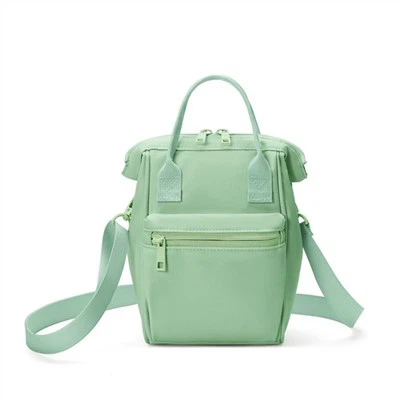
If you’re in the market for a multi-functional outdoor chest bag, whether you’re a hiker, cyclist, or someone who just needs a durable bag for outdoor activities, don’t settle for a bag that says it has a breathable back panel. Ask the brand for details: what materials did they use? What’s the MVTR? Have they tested it in real conditions? And if you’re a business looking to source these bags for your own customers, we’d love to chat more about our back panel design, our testing process, and how our multi-functional outdoor chest bags can meet your needs. We work closely with businesses of all sizes, from small outdoor shops to large retail chains, and we’re always happy to share more specs, test results, and samples. You can reach out to us directly to discuss your requirements, no obligation attached.
Computer Bag References
- American Society for Testing and Materials. (2020). Standard Test Method for Water Vapor Transmission of Materials (ASTM E96). ASTM International.
- Outdoor Industry Association. (2022). Outdoor Gear Performance Standards: Back Panel Ventilation for Active Use. OIA Technical Report.
- Textile Institute. (2021). Moisture Management Performance in Active Textiles. The Textile Institute.
- Journal of Sports Sciences. (2020). Ergonomic Design of Carrying Systems for Active Outdoor Participation. Taylor & Francis.
Address: 5th Floor, Southern Color Printing, No. 36, Fengshun Road, Fengze District, Quanzhou City, Fujian Province
E-mail: sales@dexetebag.com
WebSite: https://www.dxtbag.com/
