What is the torque of a Decanter Centrifuge?
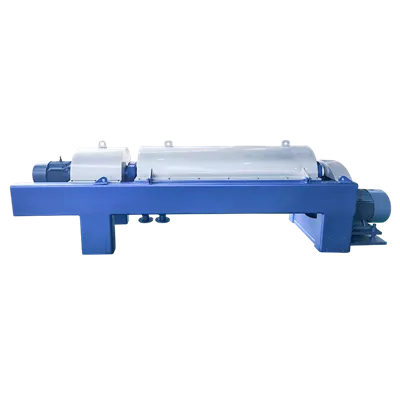
As a supplier in the field of decanter centrifuges, I often encounter inquiries from customers about various technical aspects of these machines. One question that arises frequently is, "What is the torque of a decanter centrifuge?" Today, I’ll delve into this topic to provide a comprehensive understanding of torque in the context of decanter centrifuges. Decanter Centrifuge
Understanding Torque
Torque, in physics, is a measure of the force that can cause an object to rotate about an axis. Similar to how force is what causes an object to accelerate in linear kinematics, torque is responsible for angular acceleration. It is often described as a "twisting force." The mathematical formula for torque (τ) is given by the product of the force (F) applied and the perpendicular distance (r) from the axis of rotation to the point where the force is applied, i.e., τ = r × F.
In the context of a decanter centrifuge, torque is a critical parameter that plays a significant role in its operation. A decanter centrifuge is a continuous solid – liquid separation device that uses centrifugal force to separate solids from liquids. It consists of a rotating bowl and a screw conveyor inside the bowl. The torque in a decanter centrifuge is related to the forces acting on the screw conveyor as it tries to convey the separated solids out of the centrifuge.
Torque in Decanter Centrifuges
The torque in a decanter centrifuge is mainly generated due to the resistance encountered by the screw conveyor while transporting the separated solids. When a decanter centrifuge is in operation, the feed mixture is introduced into the rotating bowl. The centrifugal force causes the denser solids to settle on the inner wall of the bowl, while the lighter liquid phase forms an inner layer. The screw conveyor, which rotates at a slightly different speed than the bowl, then moves the settled solids towards the solids discharge end of the centrifuge.
The torque required to drive the screw conveyor depends on several factors. Firstly, the characteristics of the solids being processed have a significant impact. If the solids are highly viscous, abrasive, or have a high specific gravity, they will offer more resistance to movement. For example, in the treatment of sludge from industrial wastewater, which often contains a high concentration of heavy metals and fibrous materials, the screw conveyor has to work harder to push the solids out, resulting in a higher torque requirement.
Secondly, the flow rate of the feed mixture also affects the torque. A higher feed rate means more solids need to be conveyed per unit time, which in turn increases the load on the screw conveyor. If the centrifuge is operated at a flow rate beyond its design capacity, the torque can increase significantly, potentially leading to overloading and mechanical failure.
Another important factor is the differential speed between the bowl and the screw conveyor. The differential speed determines the rate at which the solids are conveyed. A larger differential speed will result in a faster removal of solids, but it also increases the shear forces acting on the solids and the torque requirement. Conversely, a smaller differential speed reduces the torque but may lead to solids accumulation in the bowl.
Measurement and Monitoring of Torque
Accurate measurement and monitoring of torque in a decanter centrifuge are crucial for its efficient and reliable operation. There are several methods for measuring torque. One common approach is to use a torque sensor installed on the shaft of the screw conveyor. The torque sensor works by detecting the deformation of the shaft due to the applied torque. This deformation is then converted into an electrical signal, which can be measured and displayed on a control panel.
Many modern decanter centrifuges are equipped with advanced control systems that continuously monitor the torque. These systems can provide real – time data on the torque values, allowing operators to adjust the operating parameters such as the feed rate and differential speed to maintain optimal performance. In addition, the control systems can also trigger alarms when the torque exceeds a predefined limit, indicating potential problems such as blockage or overloading.
Impact of Torque on Decanter Centrifuge Performance
The torque of a decanter centrifuge has a direct impact on its performance. Insufficient torque can lead to incomplete solids discharge, causing solids to accumulate in the bowl. This not only reduces the separation efficiency but can also damage the centrifuge over time. For example, if the torque is too low to convey the solids effectively, the solids may build up and cause an imbalance in the rotating parts, leading to excessive vibration and wear on the bearings.
On the other hand, excessive torque can also be detrimental. It can put additional stress on the mechanical components of the centrifuge, such as the drive电机s, gearboxes, and shafts. This can lead to premature failure of these components, increasing maintenance costs and downtime. Therefore, it is essential to maintain the torque within the optimal range for the specific application.
Selecting the Right Decanter Centrifuge Based on Torque Requirements
As a decanter centrifuge supplier, we understand that different applications have different torque requirements. When selecting a decanter centrifuge, it is crucial to consider the torque capacity along with other factors such as the separation efficiency, throughput, and ease of maintenance.
For applications where high – torque is required, such as in the mining and chemical industries, we offer decanter centrifuges with robust drive systems and high – torque capacities. These centrifuges are designed to handle challenging feed materials and high flow rates. On the other hand, for applications with lower torque requirements, such as in some food and beverage processing, we have more compact and energy – efficient models available.
Our technical team is always ready to assist customers in determining the appropriate decanter centrifuge based on their specific torque needs. We take into account the characteristics of the feed material, the desired separation efficiency, and the expected throughput to recommend the most suitable centrifuge model.
Conclusion
In conclusion, torque is a fundamental parameter in the operation of a decanter centrifuge. It is influenced by various factors such as the properties of the solids, feed flow rate, and differential speed. Accurate measurement and monitoring of torque are essential for ensuring the efficient and reliable operation of the centrifuge. By understanding the torque requirements of different applications, customers can select the right decanter centrifuge to meet their specific needs.
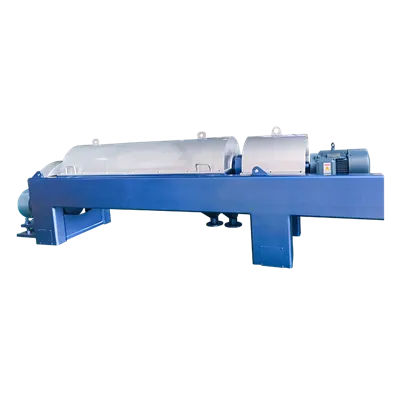
2 Phase Decanter Centrifuge If you are in the market for a decanter centrifuge and need more information about torque or any other technical aspects, we encourage you to reach out to us. Our team of experts is eager to discuss your requirements and provide you with the best solutions for your separation needs. Contact us today to start the conversation about purchasing a high – quality decanter centrifuge for your business.
References
- Perry, R. H., & Green, D. W. (1997). Perry’s Chemical Engineers’ Handbook. McGraw – Hill.
- Dick, W. A., & Ewing, R. A. (1992). Centrifuge Technology. Technomic Publishing Co.
- Schubert, H., & Gösele, U. (2008). Separation and Sieving Technology. Wiley – VCH.
Lishui Yuanrong Environmental Protection Equipment Co., Ltd.
As one of the most professional decanter centrifuge manufacturers and suppliers in China, we have world-leading production equipment and strong manufacturing capabilities. Please feel free to buy customized decanter centrifuge from our factory. Also, quotation is available.
Address: Lot 6-1, Block 15, Wanyang Zongchuang City, Lishui, Zhejiang, China
E-mail: 361184920@qq.com
WebSite: https://www.yrhdc.com/
