Hey there! I’m a supplier of leather belts, and you know, one question I get asked a lot is, "What is the origin of leather belts?" It’s a super interesting topic, so I thought I’d dive deep into it and share what I’ve learned over the years in the business. Leather Belts
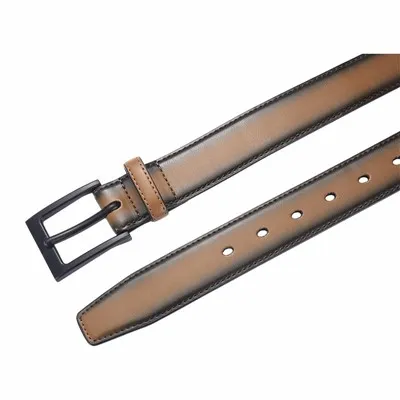
Let’s start way back in history. Leather belts have been around for ages, dating as far back as prehistoric times. You can imagine early humans, trying to figure out how to keep their animal – skin clothing from falling off. They probably took strips of animal hide and tied them around their waists. These weren’t the fancy belts we have today, but they served the basic purpose. Back then, survival was the name of the game, and having something to hold up your pants or carry tools was crucial.
Fast forward to ancient civilizations. The Egyptians were big on belts. They made belts out of leather, often decorating them with precious metals and stones. These weren’t just functional items; they were also a sign of status. Pharaohs and high – ranking officials would have elaborate, jeweled belts to show off their wealth and power. The common folks, on the other hand, had simpler leather belts, usually made from cowhide or goatskin.
In ancient Greece, warriors wore leather belts as part of their armor. The belts were not only used to hold their weapons but also to display their military rank. You could tell a lot about a soldier just by looking at his belt. Greek civilians also wore belts, mostly for practical reasons, like holding up their tunics.
The Romans took belt – making to a whole new level. They were masters of craftsmanship, and their leather belts were known for their durability and style. Roman soldiers had wide, leather belts with lots of buckles and fasteners. These belts held their weapons, swords, and all the other gear they needed in battle. For the Romans, a well – made belt was a symbol of discipline and military prowess. But it wasn’t just the soldiers who wore belts. Roman citizens also wore belts as part of their daily clothing. There were different styles for men and women, and the belts were often decorated with embossed patterns or metal studs.
Moving on to the Middle Ages in Europe, belts became even more important. They were an essential part of the outfit for knights and nobles. Knights’ belts were not only for holding their armor and weapons but also for displaying their family crest or coat of arms. The belts were made from high – quality leather, often dyed in rich colors like red or black. Noblewomen also wore belts, which were usually more decorative, made with silk threads and embroidered with beautiful designs.
During the Renaissance, fashion started to play a bigger role in belt – making. Belts became more of a statement piece. They were made in a variety of styles, from simple leather straps to elaborate, bejeweled creations. People were more concerned with looking good than just having a practical item. The wealthy would commission belts made by the best artisans, using the finest leathers and the most expensive materials.
In the 19th century, the Industrial Revolution changed the game for leather belts. Mass – production techniques made belts more affordable and accessible to the general public. Factories could produce belts in large quantities, and the quality was still relatively good. This is when leather belts started to become a staple in men’s and women’s fashion. Different styles emerged, like the wide, western – style belts that were popular in the United States, especially in the cowboy culture.
Now, let’s talk about the materials used in making leather belts. The most common type of leather used is cowhide. It’s tough, durable, and can withstand a lot of wear and tear. Cowhide belts can be made in different finishes, like smooth or textured. The smooth finish gives a more sophisticated look, while the textured finish can be more rugged and rustic.
Another popular type of leather is sheepskin. Sheepskin is softer and more flexible than cowhide, making it a great choice for belts that need to be comfortable to wear. It also has a nice, natural grain that gives it a unique look.
Goatskin is also used in belt – making. It’s known for its strength and durability, and it has a distinctive grain pattern. Goatskin belts can be a bit more expensive than cowhide or sheepskin, but they offer a high – quality option for those who want something different.
As a leather – belt supplier, I’ve seen a lot of trends come and go. In recent years, there has been a growing demand for sustainable and eco – friendly leather belts. People are more conscious about where their products come from and how they are made. So, we’ve been working on using leather that is sourced from ethical and sustainable farms. We also try to minimize waste in the production process and use natural dyes whenever possible.
Another trend is the rise of custom – made leather belts. Customers are looking for something unique, something that reflects their personality. They want to choose the type of leather, the color, the buckle style, and even add their own personal touches like initials or a special design. It’s really exciting to work with customers to create these one – of – a – kind belts.
If you’re in the market for leather belts, whether it’s for personal use or for your business, I’d love to talk to you. I’ve been in this business for a long time, and I know my stuff. I can offer you a wide range of high – quality leather belts at competitive prices. Whether you want a classic, simple belt or a trendy, customized one, we can make it happen. So, don’t hesitate to reach out to me to start the conversation about your leather – belt needs.
Kids’ Belts References:
- "A History of Ancient Clothing" by Richard Rudgley
- "Fashion Through the Ages" by David Kunzle
- "The Encyclopedia of Leatherworking" by John Cullen
Pingyang County Ganhua Leather Goods Co., Ltd.
As one of the most professional leather belts manufacturers and suppliers in China, we’re featured by quality products and good service. Please rest assured to wholesale customized leather belts made in China here from our factory. Also, free sample is available.
Address: No. 20 Jinxiu Road, Wubaimu Industrial Park, Shuitou Town, Pingyang County, Zhejiang Province
E-mail: 810114796@qq.com
WebSite: https://www.ganhuabelt.com/
