As a supplier of FPV drone LiPo batteries, I’ve witnessed firsthand the crucial role these power sources play in the world of FPV (First-Person View) drones. The efficiency of an FPV drone LiPo battery is a topic that not only fascinates enthusiasts but also has a significant impact on the performance and experience of flying these high – speed, agile machines. FPV Drone Lipo Battery
Understanding LiPo Batteries
First, let’s briefly understand what LiPo (Lithium – Polymer) batteries are. LiPo batteries are a type of rechargeable battery that offers several advantages over traditional battery chemistries. They are lightweight, have a high energy density, and can deliver high discharge rates, making them ideal for FPV drones. These drones require a power source that can provide a large amount of energy quickly to power their motors and electronics during high – speed maneuvers.
The basic structure of a LiPo battery consists of multiple cells connected in series or parallel. Each cell has a nominal voltage of around 3.7V, and the total voltage of the battery depends on the number of cells. For example, a 3S (3 – cell) LiPo battery has a nominal voltage of 11.1V (3.7V x 3).
Measuring Battery Efficiency
Efficiency in the context of an FPV drone LiPo battery can be measured in several ways. One of the most important metrics is the energy density. Energy density is defined as the amount of energy stored in a battery per unit volume or mass. A higher energy density means that the battery can store more energy in a smaller and lighter package. This is crucial for FPV drones, as reducing weight can improve flight performance, including speed, agility, and flight time.
Another key aspect of efficiency is the discharge rate. The discharge rate, often expressed in C – ratings, indicates how quickly a battery can deliver its stored energy. For example, a 20C battery can discharge at a rate 20 times its rated capacity. A higher C – rating allows the battery to provide more power to the drone’s motors, enabling faster acceleration and more aggressive flying.
The charge – discharge efficiency is also an important factor. This refers to the ratio of the energy that can be retrieved from the battery during discharge to the energy that was put into the battery during charging. A high charge – discharge efficiency means that less energy is lost as heat during the charging and discharging process, which is beneficial for both the battery’s lifespan and the overall performance of the drone.
Factors Affecting Battery Efficiency
Several factors can affect the efficiency of an FPV drone LiPo battery. Temperature is one of the most significant factors. LiPo batteries perform best within a certain temperature range, typically between 20°C and 30°C. When the temperature is too low, the battery’s internal resistance increases, which reduces its discharge rate and overall efficiency. On the other hand, high temperatures can cause the battery to degrade more quickly and may even lead to safety issues such as swelling or fire.
The age and usage history of the battery also play a role. As a LiPo battery is charged and discharged over time, its capacity and efficiency gradually decrease. This is due to the degradation of the battery’s electrodes and electrolyte. Over – discharging or over – charging the battery can also accelerate this degradation process.
The quality of the battery construction and the materials used also impact efficiency. High – quality batteries are made with better – quality electrodes, electrolytes, and separators, which can improve the battery’s energy density, discharge rate, and charge – discharge efficiency.
Importance of Battery Efficiency in FPV Drones
In the world of FPV drones, battery efficiency is of utmost importance. For competitive FPV racing, a high – efficiency battery can provide the extra power needed for quick acceleration and high – speed flights. This can make a significant difference in race times, as even a fraction of a second can determine the winner.
For freestyle FPV flying, where pilots perform complex maneuvers such as flips, rolls, and dives, a battery with a high discharge rate is essential. It allows the motors to respond quickly to the pilot’s commands, enabling smooth and precise flying.
Flight time is another critical aspect. A more efficient battery can store more energy and deliver it more effectively, resulting in longer flight times. This is especially important for long – range FPV flights or when flying in areas where it may be difficult to recharge the battery quickly.
Our Approach as a Supplier
As a supplier of FPV drone LiPo batteries, we are committed to providing high – efficiency batteries to our customers. We source the best materials and use advanced manufacturing processes to ensure that our batteries have a high energy density, a high discharge rate, and a high charge – discharge efficiency.
We also conduct rigorous quality control tests on every battery before it leaves our facility. These tests include checking the battery’s voltage, capacity, discharge rate, and internal resistance. By doing so, we can ensure that our customers receive batteries that meet the highest standards of performance and safety.
In addition to providing high – quality batteries, we also offer technical support to our customers. We understand that many FPV enthusiasts may have questions about battery usage, charging, and maintenance. Our team of experts is available to provide advice and guidance to help our customers get the most out of their batteries.
Conclusion
The efficiency of an FPV drone LiPo battery is a complex but crucial topic. It is affected by factors such as energy density, discharge rate, charge – discharge efficiency, temperature, and battery age. A high – efficiency battery can significantly improve the performance of an FPV drone, including speed, agility, and flight time.
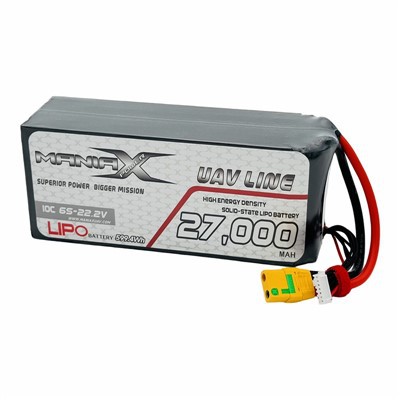
As a supplier, we are dedicated to providing our customers with the best – quality FPV drone LiPo batteries. We believe that by offering high – efficiency batteries and excellent customer support, we can help our customers take their FPV flying experience to the next level.
Accessory & Brand Merchandise If you are interested in purchasing FPV drone LiPo batteries or have any questions about our products, please feel free to contact us for a procurement discussion. We look forward to working with you to meet your FPV drone power needs.
References
- Linden, D., & Reddy, T. B. (2002). Handbook of Batteries. McGraw – Hill.
- Tarascon, J. M., & Armand, M. (2001). Issues and challenges facing rechargeable lithium batteries. Nature, 414(6861), 359 – 367.
- Dunn, B., Kamath, H., & Tarascon, J. M. (2011). Electrical energy storage for the grid: a battery of choices. Science, 334(6058), 928 – 935.
ManiaX Power Technology Co., Ltd.
ManiaX Power Technology Co., Ltd. is one of the most reliable fpv drone lipo battery manufacturers and suppliers in China, also supports customized service. Please feel free to wholesale bulk durable fpv drone lipo battery made in China here from our factory.
Address: Room 1508, 15/F, Two Grand tower, 625 Nathan Road, Kowloon, HongKong. P.R. China
E-mail: info@maniax-power.com
WebSite: https://www.maniaxpower.com/
