If you’ve ever stood next to a running pipe induction heating production line, waiting for the heating coil to warm a batch of steel pipes to the exact temperature needed for bending, welding, or coating, you’ve probably wondered: How long does this actually take? As a supplier of these lines, I get this question all the time—and the answer isn’t a one-size-fits-all number. It depends on dozens of variables that most new production managers don’t see coming, and nailing that response time is the difference between a line that runs smoothly and one that’s costing you thousands in wasted material and downtime. Pipe Induction Heating Production Line
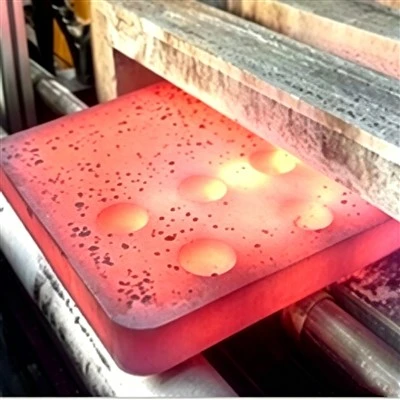
Let’s start by breaking down what “response time” even means in this context, because it’s a term that gets thrown around loosely. When I talk about pipe induction heating line response time, I’m not just referring to how fast the coil can heat a single point on a pipe. I’m talking about two key parts: first, the time it takes for the system to ramp up power from a standby state to the exact level needed to heat a new pipe as it enters the line, and second, the time it takes for the heating zone to hit the target temperature once the pipe is in place. Most people mix these two up, so let’s untangle that first.
When a line is in production, it doesn’t run at full power 24/7 between pipes. Between batches, we drop to a low standby power to keep the coil from cooling completely, but not wasting energy. When the next pipe is ready to move into the heating zone, the control system triggers a power ramp: that’s the first part of response time. How fast that happens depends on the induction power supply, which is the brain of the whole operation. For solid-state power supplies (the type we build into all our lines now, because old vacuum tube ones are obsolete for most modern production), ramp-up time ranges from 0.1 seconds to 2 seconds. That’s pretty quick, right? But here’s where it gets complicated: the coil itself can’t heat the pipe instantly. Even if the power is at full level, the pipe has to absorb that energy, and that takes time based on the pipe’s material, size, and the temperature you need.
Let’s take an example that’s common for our customers: carbon steel pipes used in oil and gas pipelines, 6 inches in diameter, 0.375 inches thick, needing to be heated to 1,500°F for hot bending. How long from when the pipe enters the coil to when it reaches that target? That’s usually between 2 and 5 seconds. Wait, why the range? If the line is set up for continuous flow, with the pipe moving at a steady speed (say 10 feet per minute, which is standard for this application), that means the heating zone length is between 4 and 10 inches. For a smaller pipe, like a 2-inch diameter steel pipe needing only 800°F for coating, that time drops to 1 to 3 seconds. Larger pipes, like 24-inch diameter line pipes needing preheating before welding? That can stretch to 10 to 15 seconds, because you need to heat a much thicker cross-section of material evenly.
But response time isn’t just about heating a single pipe. It also includes how quickly the line can adjust if something changes mid-process. Let’s say a customer is running 6-inch pipes, and halfway through a batch, they switch to 8-inch pipes, or switch from carbon steel to stainless steel. How fast does the induction line adjust? That’s where the control system’s software comes in. All the lines we supply have PLC (programmable logic controller) systems preloaded with parameters for common pipe types, sizes, and applications. Adjusting for a 2-inch size change takes less than 10 seconds—most of that is the operator inputting the new specs, not the line itself resetting. Adjusting power to heat stainless steel (which has different conductivity than carbon steel) takes even less, because the software already has the algorithms built in to adjust power levels automatically once the pipe’s material is detected.
I should mention what doesn’t affect response time, too, because I get questions about this all the time. The induction coil design is optimized to heat pipes evenly, so a good coil doesn’t add significant delay. The cooling system for the coil—we use closed-loop water cooling that’s synced to the power supply, so it’s always at the right temperature to keep the coil stable, no lag there. Where a lot of cheaper line suppliers cut corners is on the power supply and the control algorithms. We’ve seen lines from overseas suppliers that have ramp-up times of 5 seconds or more, and that might not sound like a big deal, but on a line running 100 pipes an hour, that adds up to 8 minutes of wasted time every hour. Multiply that by 20 production days a month, and you’re losing almost 27 hours of production time every month—enough to run an extra full batch of pipes. That’s the kind of cost that makes the initial price difference between a quality line and a cheap one disappear fast.
Another factor that plays into response time consistency is power stability. If your induction line is running on power that fluctuates, the response time will be inconsistent—one pipe might heat in 3 seconds, the next in 6, because the power supply can’t hold a steady output. All the lines we include come with line conditioners and power factor correction units, which keep power stable within 0.5% variance, so response time is consistent batch after batch, no surprises. For customers running high-volume production (like 10,000+ pipes a month), that consistency is non-negotiable. You can’t have quality control rejecting pipes because they were overheated or underheated due to variable response times.
Let’s get into a real-world example from one of our customers, a mid-sized pipe fabricator in Houston. They were running 8-inch diameter carbon steel pipes for water infrastructure, needing preheating to 1,200°F before welding. They’d been using an older line from a supplier that quoted a response time of 3 seconds, but in practice, they were seeing 7 to 10 seconds per pipe, plus 10 to 15 minutes of downtime every time they changed pipe sizes because the control system was outdated. When they installed our line, their ramp-up time was 0.8 seconds, pipe heating time for their standard pipe was 4.2 seconds, and adjusting for a size change took less than 10 seconds total. The result? Their production rate went up by 18%, and their reject rate from heating issues dropped from 4.2% to under 1%. That’s the kind of impact getting response time right has on a business.
I want to be clear, though: response time isn’t something you should optimize for speed alone. You need to balance speed with temperature uniformity. If you try to heat a pipe too fast, you’ll get hot spots on the inside or outside wall, which cause distortion, weak spots, or coating adhesion issues. The sweet spot for response time is the fastest you can heat the pipe evenly, without losing consistency. That’s where our engineering team spends most of their time: tuning the coil design, power supply output, and control algorithms to hit that sweet spot for each customer’s specific application. For example, when we built a line for a customer making thin-walled pipes for bicycle frames (0.065 inches thick, aluminum alloy), we had to adjust the response time to be slower—around 3.5 seconds—because aluminum conducts heat differently and thinner material can’t handle rapid heating without warping. That’s why we don’t do one-size-fits-all lines; we customize each line to match the pipe’s material, size, and end use, which directly affects response time.
Another common question I get: How does response time affect startup and shutdown? When you start the line for the first time that day, the response time is a bit longer for the first 5 to 10 pipes, because the coil is still warming up. Once the line is at operating temperature, that delay goes away. For shutdown, most customers just run the line at low standby power, so if they’re shutting down for a break, there’s no response time needed when they restart. If they’re shutting down for the night, we have a sequence that brings the power down slowly to avoid shocking the coil, which takes about 30 seconds—something we build into the control system automatically to extend the coil’s lifespan.
So to wrap this up, when someone asks me, “What’s the response time of a pipe induction heating production line?” my answer is: It depends, but for a quality line customized to your needs, you’re looking at a total response time (power ramp + pipe heating + system adjustment) that ranges from 1.5 seconds for small, thin pipes to 15 seconds for large, thick-walled pipes, with size and material adjustments taking less than 10 seconds. The key is working with a supplier who understands that response time isn’t just a number—it’s a critical factor that impacts your production rate, reject rate, and bottom line.
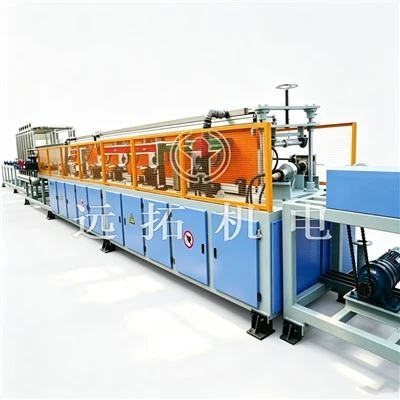
If you’re in the market for a new pipe induction heating production line, or looking to upgrade an existing one to fix laggy response times and inconsistent heating, we can help. Our engineering team will walk you through your specific pipe specs, production volume, and end-use requirements to design a line that hits your exact response time targets, no compromises.
Induction Quenching and Tempering Production Line References
- Rudnev, V., Loveless, D., Cook, R., & Black, M. (2017). Handbook of Induction Heating. CRC Press.
- American Petroleum Institute. (2020). Specification for Line Pipe (API 5L).
- Induction Heating Society. (2022). Industrial Induction Heating Applications for Pipe Manufacturing. Technical Report No. IH-2022-04.
Hebei Yuantuo Electromechanical Equipment Manufacturing Co., Ltd.
As one of the most professional manufacturers and suppliers of pipe induction heating production line in China, our products have good reputation in the market. Please rest assured to buy advanced equipment made in China here and get quotation from our factory. Customized orders are welcome.
Address: Yanshan Street West and Jialingjiang Road North, Economic and Technological Development Zone, Wuqiao County, Cangzhou City, Hebei Province, China
E-mail: yuantuotech01@gmail.com
WebSite: https://www.yuantuoem.com/
