If you’ve ever stood in the middle of a crushing plant at 2 a.m., watching a breakdown grind production to a halt, you know how critical a crusher rotor is. It’s the beating heart of every primary and secondary crusher, churning through rock, ore, and recycled material day after day. But when that rotor wears out or fails, the first question every operations manager wants answered isn’t “how do I fix it”—it’s “how much is this going to cost me?” Crusher Rotor
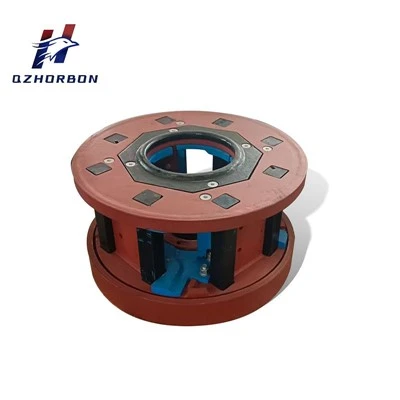
As a crusher rotor supplier who’s worked with plants across North America, from tiny quarries in rural Texas to massive mining complexes in northern Quebec, I’ve heard that question a hundred times. And if you’ve been looking for a straight answer, you already know it’s not as simple as a single number. The cost to replace a crusher rotor depends on way more than just the part itself. It’s a mix of design, material, manufacturing, logistics, labor, and even the choices you make to extend its life before failure. Let’s break this down, because skimping on costs here can cost you far more in the long run.
First, let’s get one thing clear: we’re not talking about a generic off-the-shelf part here. A crusher rotor isn’t a bolt or a conveyor belt—it’s a custom-built component engineered for your exact machine, your feed material, and your operating conditions. That’s why the base cost of the rotor itself can range anywhere from $5,000 for a small vertical shaft impact (VSI) rotor for a portable aggregate crusher to upwards of $150,000 for a large horizontal shaft impact (HSI) rotor for a heavy-duty mining crusher. I’ve seen VSI rotors for small recycling plants come in under $10k, and I’ve quoted custom HSI rotors for iron ore mining that topped $180k last year. The gap boils down to size, material grade, and engineering complexity.
Material is where most plants either save money or dig themselves into a hole. Let’s start with the basics: rotors are typically made from carbon steel, but the wear parts—blow bars, liners, and impact plates—are where the durability lives. If you opt for standard manganese steel, that’s the budget choice. It’s cheap upfront, and it work-hardens as it hits rock, which is good for mild to moderate applications like crushing limestone or gravel for concrete. But if you’re crushing abrasive material like granite, basalt, or iron ore, manganese steel will wear out fast. I had a client in Idaho a few years back who saved $2,500 on a set of manganese blow bars, only to replace them every six weeks. After a year, he’d spent $28,000 on replacements—more than double the cost of high-chrome iron blow bars that lasted four months. High-chrome or tungsten carbide inserts add 20-30% to the base rotor cost, but in abrasive applications, they cut wear-related costs by 50% or more. That’s not an extra expense—that’s an investment.
Engineering is another factor that changes the price. A rotor designed for consistent, low-abrasion feed doesn’t need the same reinforcement as one that handles large, sharp, oversized rock. For example, a VSI rotor with a simple bolt-on blow bar system is cheaper than a model with a heavy-duty welded core and sealed bearing housing for high vibration. We also engineer rotors to match your specific crusher model—say, a C150 jaw crusher rotor vs. a B9100 VSI—because cutting corners on fit leads to premature failure or even damage to other parts of your crusher. Last year, I worked with a plant that tried to install a cheaper, slightly undersized rotor on their primary HSI, and within three months, it caused a $40,000 repair to the crusher’s main frame. The $3,000 they saved on the rotor cost them 10x that.
Now, let’s move beyond the base part price. That’s only about half the total cost of replacement. The next big chunk is logistics. If you’re a local plant within 500 miles of our facility, shipping a rotor is simple—we can often deliver it in 1-2 days for a few hundred dollars. But if you’re in a remote area, like a mining site in northern Canada or a quarry in the Rocky Mountains, shipping a 10,000-pound rotor isn’t like sending a package of paper. It requires flatbed trucks, sometimes over specialized winter roads or through mountain passes, and that can add $2,000 to $10,000 to the total cost. We also offer on-site installation support, which is a big help for plants without experienced fitters. Having our techs on-site to align the rotor, seat the bearings, and test the system ensures it runs right out of the box, and that service adds another $1,500 to $5,000 depending on the location and job complexity.
Labor is where replacement costs get really tricky. A small VSI rotor can be swapped out in 4-6 hours by two mechanics, costing $800 to $1,500 in labor. But a large HSI rotor for a mining crusher? That’s an 8-12 hour job, often requiring a crane to lift the 20,000-pound component, specialized tools, and a team of 3-4 fitters. We’ve seen labor costs for large rotor replacements hit $10,000 to $15,000, and that’s if everything goes smooth. If there’s unexpected damage—like a worn main shaft or a misaligned crusher housing—that adds even more time and expense. Last quarter, a client in Arizona had their HSI rotor replacement delayed by three days because the old rotor had corroded the shaft, requiring a full shaft rework that cost an extra $7,000.
Wait, but there’s another cost that most people don’t factor in: downtime. That’s the hidden expense that can make a $50,000 rotor replacement feel like a $100,000 bill. If your crusher is running 24/7 (which most quarries and mines are), every hour of downtime costs you production. Let’s say your plant makes $15,000 an hour in revenue from crushed aggregate. A 10-hour rotor replacement job means $150,000 in lost production—way more than the cost of the part and labor. That’s why choosing a supplier who can deliver your rotor fast and help you replace it quickly isn’t just a convenience—it’s a way to protect your bottom line. We keep a large inventory of standard rotors in our warehouses across the U.S. and Canada, so we can ship same-day for emergency replacements. That cut downtime for a client in Nevada last year by 48 hours, saving them over $70,000 in lost production.
So, can you get a solid number? Let’s put it all together with real examples from our clients to make this concrete.
Example 1: Small portable VSI rotor for a gravel quarry in Ohio. The quarry crushes soft limestone, uses standard manganese steel blow bars, and is 300 miles from our warehouse. Total cost: $7,200 for the rotor, $800 for shipping, $1,000 for 4 hours of labor. Total replacement cost: $9,000. Downtime was 5 hours, so about $75,000 in lost production, but that’s a variable not included in the part/labor/ship total.
Example 2: Medium HSI rotor for a recycling plant in Texas, crushing concrete and asphalt (moderately abrasive). The plant opted for high-chrome blow bars for longer life, is 200 miles from our facility. Total cost: $22,500 for the rotor, $1,200 for shipping, $3,500 for labor and installation support. Total replacement cost: $27,200. Downtime was 8 hours, so $120,000 in lost production.
Example 3: Large mining HSI rotor for an iron ore mine in northern Minnesota. The mine uses highly abrasive hard ore, ordered a custom rotor with tungsten carbide inserts, is 1,200 miles from our warehouse. Total cost: $128,000 for the rotor, $8,500 for specialized shipping, $12,000 for on-site installation by our senior techs. Total replacement cost: $148,500. Downtime was 10 hours, so $150,000 in lost production.
Now, the big question: how do you get the best value, not just the lowest price? Let’s talk about tips we’ve picked up after years working with plants. First, don’t wait until your rotor fails unexpectedly. Most rotors give warning signs—unusual vibration, uneven wear on blow bars, lower production output. If you plan for replacement during scheduled maintenance, you can avoid emergency shipping fees and rush labor costs. We recommend scheduling rotor inspections every 2,000 hours of operation, so you can replace it before it causes secondary damage to your crusher.
Second, talk to your supplier about your specific material and operating conditions. A good crusher rotor supplier won’t just sell you the cheapest part—they’ll help you choose the right material and design. For example, if you crush both soft and hard material, we might suggest a hybrid blow bar that uses high-chrome on the wear-prone ends and cheaper steel in the middle, balancing durability and cost. We also offer rotor rebuild services for parts that aren’t too damaged, which can save up to 50% vs. buying a new rotor. Last year, we rebuilt a VSI rotor for a plant in Michigan for $3,500, when a new rotor would have cost $8,000. It’s still running strong after 12 months.
Third, ask about warranties. A quality rotor should come with a warranty that covers material defects and premature wear. We offer a 12-month warranty on all our rotors, and we stand behind our design and material choices. If a rotor wears out early because of a design flaw, we’ll replace it for free. That peace of mind is worth a lot more than a $1,000 upfront discount on a generic part with no warranty.
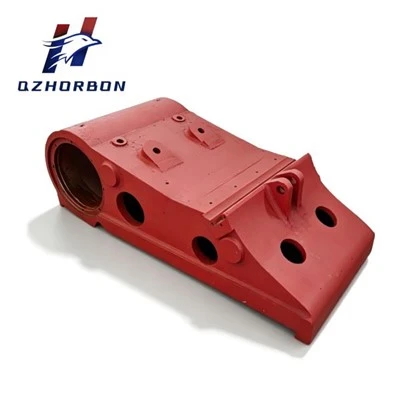
At the end of the day, the cost to replace a crusher rotor isn’t just a line item on your equipment budget. It’s a decision that affects your production, your maintenance schedule, and your long-term operational costs. If you’re tired of overpaying for rotors that wear out too fast, or dealing with long lead times when you need a replacement, we can help. We work with quarries, mines, and recycling plants to build custom rotors that fit your exact needs, offer fast delivery, and competitive pricing, so you can get back to crushing without unnecessary downtime or hidden costs. Reach out to our team to discuss your specific application, and we’ll give you a tailored quote that includes all factors—from material choice to installation support—so you know exactly what you’re getting, no surprises.
Crusher Pulley References:
- Crushing, Screening, and Comminution: Equipment Selection and Operation
- Global Mining Equipment Market Analysis, 2023-2030
- Wear Mechanisms in Crusher Components: A Practical Guide for Aggregate and Mining Operations
- Cost-Benefit Analysis of High-Wear Resistant Materials in Crushing Equipment
Quzhou Horbon Mining Parts Co., Ltd.
Quzhou Horbon Mining Parts Co., Ltd. is one of the most professional crusher rotor manufacturers and suppliers in China, featured by high quality customized service and OEM service. Please rest assured to buy premium crusher rotor at competitive price from our factory. Contact us for pricelist.
Address: No.8 Nanshan Road, Qujiang District, Quzhou City, Zhejiang Province, China
E-mail: horbonmining@gmail.com
WebSite: https://www.horbonmachinery.com/
