Hey everyone, let’s cut to the chase—if you’ve ever dug into how UPS systems keep servers, medical gear, or even your home network up and running during a grid outage, you’ve probably stumbled on DC fuses. I’m from a DC fuse supply business, so I get that most people don’t think much about these tiny, unassuming parts… until something goes wrong. That’s why I wanted to break down what a DC fuse actually does in a UPS, why it’s non-negotiable, and why you shouldn’t cut corners on picking the right one. DC Fuse

First, let’s set the stage: what’s a UPS system’s job again? It’s not just a backup battery. A good UPS keeps critical loads powered smoothly when the grid cuts out, and it also acts as a buffer to protect gear from surges, drops, or weird electrical noise coming from the mains. Most modern UPS systems that support large-scale setups (like data center racks, hospital equipment bays, or telecom towers) run on DC power for their internal battery banks. That means the whole system’s DC side is the backbone—mess that up, and the whole UPS fails.
Now, what’s a DC fuse? It’s different from the AC fuses you might have in your home breaker box, right? AC fuses work when alternating current reverses direction, which helps the arc (that spark that happens when current breaks) die out fast. DC current flows in one steady direction, so that arc is way harder to extinguish. That’s why DC fuses are built totally different—they’re designed specifically to handle the unique stresses of DC circuits, no surprise there.
So where exactly does a DC fuse live in a UPS? Let’s walk through a basic UPS setup. You’ve got three main parts: the rectifier (that takes AC from the grid and turns it into DC to charge the batteries), the battery bank itself (like those big lead-acid or lithium-ion packs you see in server rooms), and the inverter (that turns DC back into AC to power your gear during an outage). The DC fuse is strategically placed at two key points here: one between the rectifier and the battery bank, and another between the battery bank and the inverter. Some UPS systems also have a DC fuse between the battery and the main bus bar, depending on their size.
Now, the big question: what’s its actual role, beyond just “stopping current if something breaks”? Let’s break this down into three core jobs, because that’s where most people miss the fine print.
First job: Overcurrent protection for the battery bank. Batteries are powerful, but they’re finicky. If a wire inside a battery shorts out, or a faulty component in the UPS’s rectifier sends way too much current to the battery, that’s a recipe for disaster. Too much current flowing into a battery that’s already charged can overheat it, cause thermal runaway (yikes, that’s when batteries catch fire or explode), or destroy the battery’s cells entirely. The DC fuse senses that current spike—way faster than any circuit breaker sometimes— and melts its internal conductor to break the circuit before the damage gets bad. I’ve seen customers try to use a cheap AC fuse here to save a buck, and it never works. Those fuses can’t handle DC arcs, so they either don’t break the circuit at all, or they cause a way bigger arc that fries the whole battery bank. That’s a costly mistake— a single lithium-ion battery bank for a 10kW UPS can run into tens of thousands of dollars, plus downtime costs that could be way higher for businesses.
Second job: Isolation and fault containment. Let’s say the inverter part of the UPS has a failure—maybe a transistor shorted out, sending DC current surging back into the battery bank. Without a DC fuse, that surge would keep flowing through the entire system, frying the rectifier, the inverter, and even the load connected to the UPS. The DC fuse acts like a gatekeeper here. If there’s a fault downstream (or upstream), it blows only on the side of the problem, isolating the damaged part so the rest of the UPS can still function. For example, if a faulty cell in the battery bank causes a short, the fuse connected to that battery string blows, and the rest of the battery bank keeps powering the inverter during an outage. That continuity is make-or-break for critical loads—imagine a hospital’s ICU losing power because a tiny battery fault took out the whole UPS. I can’t tell you how many times our team has gotten a call from a telecom company that had a UPS failure, and after inspection, the problem was that their old DC fuses couldn’t isolate a fault fast enough, leading to total system shutdown.
Third job: Coordination with other UPS components. A UPS is a team, right? The rectifier has its own overcurrent protection, the inverter has breakers, the battery has monitoring systems. The DC fuse has to be calibrated to work with all of these. If the fuse blows too fast during a normal, temporary current spike (like when the inverter kicks on, which draws a little extra current for a split second), that’s a nuisance that can take the whole UPS offline for no reason. If it’s too slow, it won’t stop a fault before damage happens. That’s where we come in as a DC fuse supplier—we don’t just sell parts. We work with UPS engineers to match the fuse’s current rating, voltage rating, and blowing time to the specific UPS model and battery bank size. For example, a 48V lithium-ion battery bank for a small office UPS needs a totally different fuse than a 480V lead-acid bank for a data center. If you get that wrong, you’re either replacing fuses every other month (wasting time and money) or dealing with a major failure down the line.
Wait, let’s talk about the stuff people don’t usually mention: DC fuses aren’t just for big industrial UPS setups. Even the small home UPS that keeps your modem and router up during a storm has a DC fuse. It’s just way smaller, designed for lower current. But the same logic applies—protect the battery, isolate faults, keep the system running. But most of the time, when people talk about DC fuses in UPS, they’re talking about the high-voltage, high-current ones for commercial and industrial use, which is where we focus most of our work.
Now, let’s get real about common mistakes we see. First, using the wrong voltage rating. DC fuses are rated for a specific DC voltage, so if you put a 100V fuse on a 200V circuit, it won’t extinguish the arc when it blows. That arc can jump across the fuse’s terminals, keeping the circuit alive and leading to a fire. We’ve had customers send us failed fuses that were clearly mismatched, and 9 times out of 10, that’s the root cause, not a faulty fuse itself. Second, buying unrated, generic fuses from Amazon or no-name suppliers. A lot of cheap fuses out there don’t go through the same testing as industrial-grade ones—they might melt at the wrong current, or not break the circuit at all. When you’re talking about a UPS that powers a hospital, a bank’s servers, or a telecom tower that 911 calls rely on, cutting corners on fuses is reckless.
Another thing: maintenance. DC fuses don’t last forever, right? They have a service life, usually around 10 years, depending on how much they’re used and the conditions (extreme heat or cold shortens their life). A lot of companies forget to check their fuses during routine UPS maintenance. We’ve had clients come to us because their UPS failed during an outage, and when we tested their old fuses, they were corroded, so they couldn’t blow when they needed to. Routine checks and replacing fuses before they degrade is way cheaper than dealing with a full UPS replacement or downtime.
Let’s circle back to my end, since that’s what you’re here for if you’re in the UPS or critical power space. As a DC fuse supplier, our job isn’t just to send you a box of fuses. We test every single one of our products to make sure they meet industry standards (we follow UL, IEC, and ANSI specs, for anyone who cares about that) and work with all the major UPS brands. We also help our clients size the right fuse for their setup, whether it’s a small office UPS or a 1MW data center system. If you’re dealing with a UPS failure, or just want to upgrade your protection to avoid future issues, we can walk you through matching the right fuse to your specific battery bank, voltage, and current needs.
Wait, I want to make sure this is clear: the DC fuse is not a afterthought in a UPS. It’s a core safety and reliability component. Every UPS has a bunch of parts that people talk about—batteries, rectifiers, inverters—but the DC fuse is the quiet hero that keeps everything from going sideways. I’ve been in this industry long enough to see that a lot of critical power failures could’ve been avoided if someone had invested in the right DC fuses, instead of going with the cheapest option.
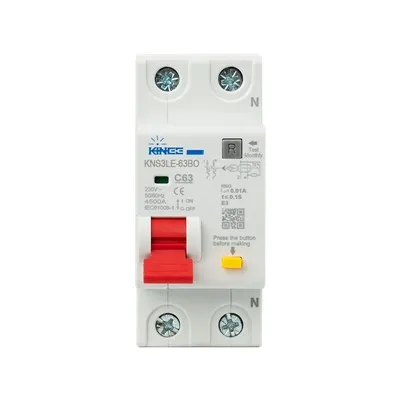
So if you’re a UPS installer, a facilities manager for a hospital or data center, or anyone working with critical power systems, don’t sleep on your DC fuses. It’s way better to get the right fuse up front than to fix a fire or downtime later. And if you need help sourcing or sizing the right DC fuses for your UPS setup, we’re here to help with that.
Industrial Terminal Block References:
- "DC Fuse Application Guidelines for Battery Energy Storage Systems and UPS", International Electrotechnical Commission (IEC) Standard 60269-6, 2021.
- "Critical Power System Design and Maintenance", Electrical Construction & Maintenance (EC&M) Magazine, 2023.
- "Lithium-Ion Battery Protection in Uninterruptible Power Supplies", Underwriters Laboratories (UL) White Paper, 2022.
Wenzhou Kinee Electrical Co., Ltd.
We are one of the most professional dc fuse manufacturers and suppliers in China, featured by quality products and good price. Please rest assured to buy advanced dc fuse made in China here from our factory. We also accept customized orders.
Address: Unit 1, Building 31, Wenzhou Wenbo Science and Technology Industrial Park, No. 706 Yanyun Road, Lingkun Street, Oujiangkou Industrial Cluster Area, Wenzhou, Zhejiang Province
E-mail: sandyma@kinee.net
WebSite: https://www.kinee.net/
