As someone who’s spent the last 12 years in the air separation unit (ASU) space, I’ve sat through more late-night client calls than I can count—usually starting with a panic: “Our argon yield is down 15% this month, and we can’t figure out why.” More often than not, the culprit isn’t a faulty distillation column or a worn-out compressor. It’s the air going in. The purity of input air is the unsung backbone of every ASU, and overlooking it is like baking a cake with expired flour: no matter how good your recipe (or equipment) is, the final product will fall short. Type Of Air Separation Unit
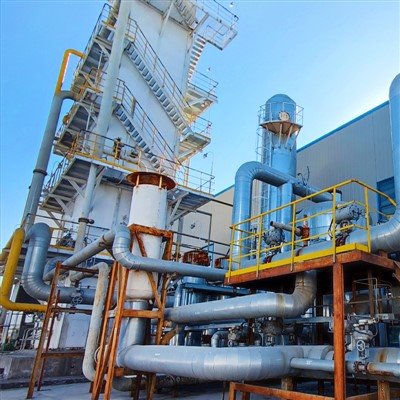
Let’s start with the basics, because if you’re an industrial operator new to cryogenic air separation, this foundation matters. An ASU works by taking ambient air, compressing it, cooling it to near-liquid temperatures, and then distilling it into its core components: nitrogen, oxygen, and argon—plus trace gases like carbon dioxide (CO₂), water vapor, and volatile organic compounds (VOCs) that aren’t wanted in the final product. Each stage relies on those trace gases being removed before they can damage the system or contaminate the output. When input air purity is off—meaning it has higher levels of unwanted contaminants than standard specifications—every part of that process gets thrown out of whack, and the output takes a direct hit.
First, let’s talk about the most common and impactful contaminants: CO₂ and water vapor. Ambient air naturally has about 0.04% CO₂ (400 parts per million, or ppm) and variable water vapor, depending on humidity. The standard for most ASUs is to get input air with CO₂ levels below 1 ppm and water vapor below -40°C dew point, right before it enters the cryogenic distillation section. Why? Because at those super-cold temperatures (we’re talking -183°C for oxygen, -196°C for nitrogen), even a tiny bit of CO₂ or water will freeze solid. I had a client in the steel industry a few years back who skipped a pre-treatment filter change to save $1,200. Within three months, ice and CO₂ frost built up so thick in their heat exchangers that the air flow to the distillation column dropped by 22%. Their oxygen output—critical for their steel melting furnaces—fell from 99.5% purity to 98.2%, and they had to shut down the ASU for 48 hours to defrost. The cost of that downtime? Over $75,000. That’s when I learned first-hand that input air purity isn’t just a “quality check” box—it’s a bottom-line issue.
Next, let’s dive into how these frozen contaminants hit specific outputs. For oxygen production, the biggest risk from high CO₂ or water is not just flow restriction, but contamination of the liquid oxygen sump in the distillation column. If CO₂ crystals get carried over into the sump, they can dissolve into the liquid oxygen, pushing its purity below the required 99.5% for medical or industrial-grade oxygen. In fact, the FDA and ISO have strict limits for medical oxygen (≤10 ppm CO₂, ≤1 ppm total hydrocarbons), and even a small freeze-up can send an entire batch out of spec. One of our long-time clients in the medical gas sector told us that in 2021, a competitor’s ASU they rented had 10 unplanned purity alerts in 6 months, all traced back to inadequate input air pre-treatment. We retrofitted their pre-filtration system to hold input CO₂ to 0.8 ppm, and those alerts dropped to zero. That’s the kind of impact that’s easy to miss until you see the numbers.
Now, argon—often the “middle child” of ASU outputs, but a huge revenue driver for operators who sell it to the food and semiconductor industries. Argon makes up just 0.93% of ambient air, so distilling it requires a very precise separation from oxygen and nitrogen. Here’s where input air purity gets extra critical: argon yield drops sharply if there are trace hydrocarbons in the input air. Hydrocarbons like benzene, toluene, or even methane (from nearby industrial emissions or vehicle exhaust) don’t freeze the way CO₂ does, but they build up in the argon side stream during distillation. For semiconductor-grade argon, which needs 99.999% purity, even 0.1 ppm of benzene is enough to ruin the batch. I worked with a semiconductor fabrication plant in Arizona a couple of years ago that was located near a busy highway, and their input air had unexpectedly high toluene levels (up to 0.5 ppm) during summer heat waves. Their argon yield was 28% lower than their contract required, costing them over $200,000 in penalties before they adjusted. The fix? Adding a activated carbon filter to their input air system that removed hydrocarbons to below 0.02 ppm, and within a month their argon yield was back to 97% of their design capacity.
Nitrogen, the largest output of most ASUs (making up 78% of ambient air), also suffers when input air is impure. While nitrogen is less sensitive to trace CO₂ than oxygen, high levels of water vapor can corrode the piping in the nitrogen storage system over time. For operators who use high-pressure nitrogen for gas blanketing in oil and gas or food processing, corrosion isn’t just a maintenance issue—it’s a safety hazard. A client in the petrochemical industry once had a nitrogen pipeline rupture because of water buildup from impure input air, leading to a 3-day plant shutdown and millions in lost production. Regular testing of input air for water vapor would have caught that issue months earlier, but they’d skipped the practice. That’s a mistake I see all too often: operators focus on the output purity and forget that the input is the root of most problems.
Let’s talk about a more nuanced factor: variable input air quality. Ambient air isn’t static—its purity changes with location, weather, and nearby activity. If your ASU is near a factory that emits VOCs, or in a coastal area with high salt content in the air, those contaminants will get pulled into your system if your pre-treatment isn’t robust enough. A few years back, we installed two ASUs at a fertilizer plant in Louisiana that’s right on the coast. The input air there has high salt levels, which can corrode the compressor blades if not filtered out properly. We specified a multi-stage pre-filter system that removes 99.9% of salt particles, and their compressor life is now 20% longer than the plant’s original units, even with the harsh coastal air. Without that tailored pre-treatment, their compressor would have failed in under 3 years, instead of the 5+ years we’re seeing now. The takeaway here is that input air purity isn’t a one-size-fits-all metric—operators need to test their local ambient air and design their pre-treatment accordingly, otherwise even a well-built ASU will underperform.
Another point that’s often overlooked: the impact on energy efficiency. ASUs are massive energy hogs—they account for about 2% of global industrial energy use, according to the International Energy Agency. When input air is impure, the ASU has to work harder to compress and cool it, because the contaminants add extra load on the heat exchangers and compressors. I’ve calculated that for every 10 ppm increase in CO₂ in input air, an ASU uses about 1.5% more energy to maintain the same output purity. That might not sound like much, but for a 100-ton per day ASU, that’s an extra $18,000 a year in energy costs—money that could go toward expanding production or upgrading equipment. One of our customers in Germany recently switched to testing input air daily and adjusting their pre-filters proactively, and they cut their ASU’s energy use by 8% in six months. That’s a huge win for their bottom line and their carbon footprint.
Now, let’s get practical. I know a lot of operators reading this are probably thinking, “How do I actually measure input air purity, and what specs do I need to hit to avoid these issues?” From my experience, the minimum standard for most industrial ASUs is: CO₂ ≤ 1 ppm, water vapor dew point ≤ -40°C at operating pressure, total hydrocarbons ≤ 0.1 ppm, and particulate matter ≤ 0.01 microns. For specialty outputs like semiconductor-grade argon or medical oxygen, you’ll need tighter specs: CO₂ ≤ 0.5 ppm, total hydrocarbons ≤ 0.05 ppm, and particulate matter ≤ 0.005 microns. The key is to test your input air at least once a week (more often if you’re near industrial areas or busy roads) and work with your ASU supplier to adjust your pre-treatment system as needed.

At the end of the day, the air separation industry is all about reliability and consistency. Operators need their outputs to meet contract specs every month, no exceptions. I’ve seen too many good ASU installations fail because someone cut corners on input air quality. That’s why when we work with clients, the first thing we do isn’t talk about distillation columns or compressor size—it’s test their ambient air, map their local contaminants, and design a pre-treatment system that’s tailored to their specific environment. We’ve had clients come to us after dealing with years of low yields and unexpected shutdowns from other suppliers, and fixing their input air purity was the single biggest change we made.
Air Separation Unit If you’re an ASU operator who’s dealing with inconsistent output, unplanned downtime, or higher energy costs than you expected, the first step is to look upstream at your input air. It’s easy to focus on the complex, high-ticket parts of your system, but the foundation of good performance is right in front of you. If you want to talk through how to test your input air, adjust your pre-treatment, or optimize your system’s performance, we’re here to help. Don’t let impure input air hold your operations back. Get in touch, and we can work together to make sure your ASU delivers exactly what you need, every time.
References
- International Energy Agency. (2020). The Future of Hydrogen: Seizing Today’s Opportunities. OECD/IEA.
- American Society of Mechanical Engineers. (2018). Cryogenic Air Separation: Design, Operation, and Maintenance. ASME Press.
- U.S. Food and Drug Administration. (2022). Grade A Medical Oxygen Quality Standards. FDA Center for Drug Evaluation and Research.
- Air & Waste Management Association. (2021). Ambient Air Contaminant Impacts on Industrial Gas Processing. AWM Journal.
- International Organization for Standardization. (2019). ISO 14644-1: Cleanrooms and Associated Controlled Environments – Part 1: Classification of Air Cleanliness. ISO.
Xinxiang Jiale Intelligent Equipment Co., Ltd.
As one of the most professional air separation unit manufacturers and suppliers in China, we’re featured by quality products and good service. Please rest assured to buy durable air separation unit for sale here from our factory. We also accept customized orders.
Address: No.3913, 9th Floor, Unit 3, East Commercial and Office Complex, Baolong City Plaza, Hongqi District, Xinxiang City, Henan Province, China
E-mail: cc2397410@gmail.com
WebSite: https://www.jiale-asu.com/
